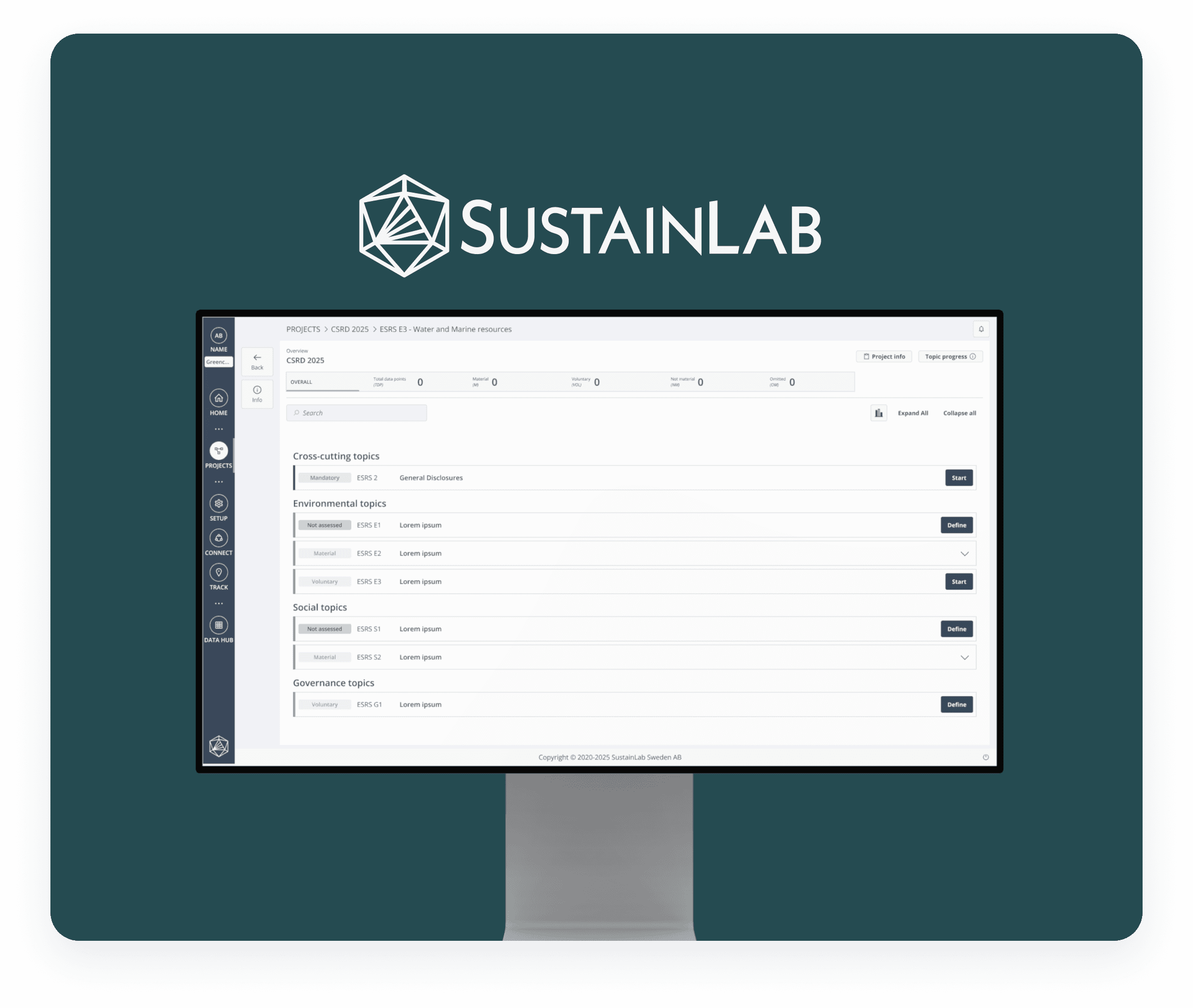
Sustainability Management Platform
A complete sustainability management platform project for SustainLab.
My role
Company
Sustainlab
Country
Sweden
Project overview
SustainLab is a sustainability data management platform that helps companies track, analyze, and report their ESG performance. Our UX team worked on improving the overall experience of the platform. From designing user flows and high-fidelity interfaces to establishing a unified design system that supports long-term growth.
When I joined the project, the platform had a functional structure but lacked design consistency and a clear visual system. Over time, we helped shape the design direction, focusing on usability, clarity, and alignment across features.
My role
As part of the UX team, my main responsibility was to design new feature flows, improve existing interfaces, and maintain a scalable design system. We collaborated closely with both developers and product managers to ensure smooth execution from concept to implementation. My key contributions included:
Challenges & goals
Challenge
Working on a large, evolving platform came with several challenges:
- •Design feasibility:Some design ideas required negotiation to fit within sprint timelines and development constraints.
- •Data complexity:Presenting large and abstract sustainability data in a way that users could easily understand and trust.
- •Team coordination:Aligning with developers and CX teams when requirements evolved mid-sprint.
- •Scalability:Maintaining design consistency as new modules and features were added over time.
Goal
The main goals for the project were:
- •Create clarity:Make complex data easy to read and navigate.
- •Ensure consistency:Build a solid visual and interaction system that scales with the product.
- •Support collaboration:Design processes and templates that make handoffs easier between design and development.
- •Improve confidence:Help users feel more in control when working with large sustainability datasets.
Process
Each project started with gathering feedback from both internal teams and real users. We'd map out the flows and lay out the content structure before diving into high-fidelity design. Along the way, we built and expanded the design system to keep things consistent and scalable as the platform grew.
Wireframes were used early to test the concept, followed by polished UI designs that aligned with the evolving design system. Prototypes helped clarify interactions before handoff. Everything was documented to ensure smooth communication with developers and future design iterations.
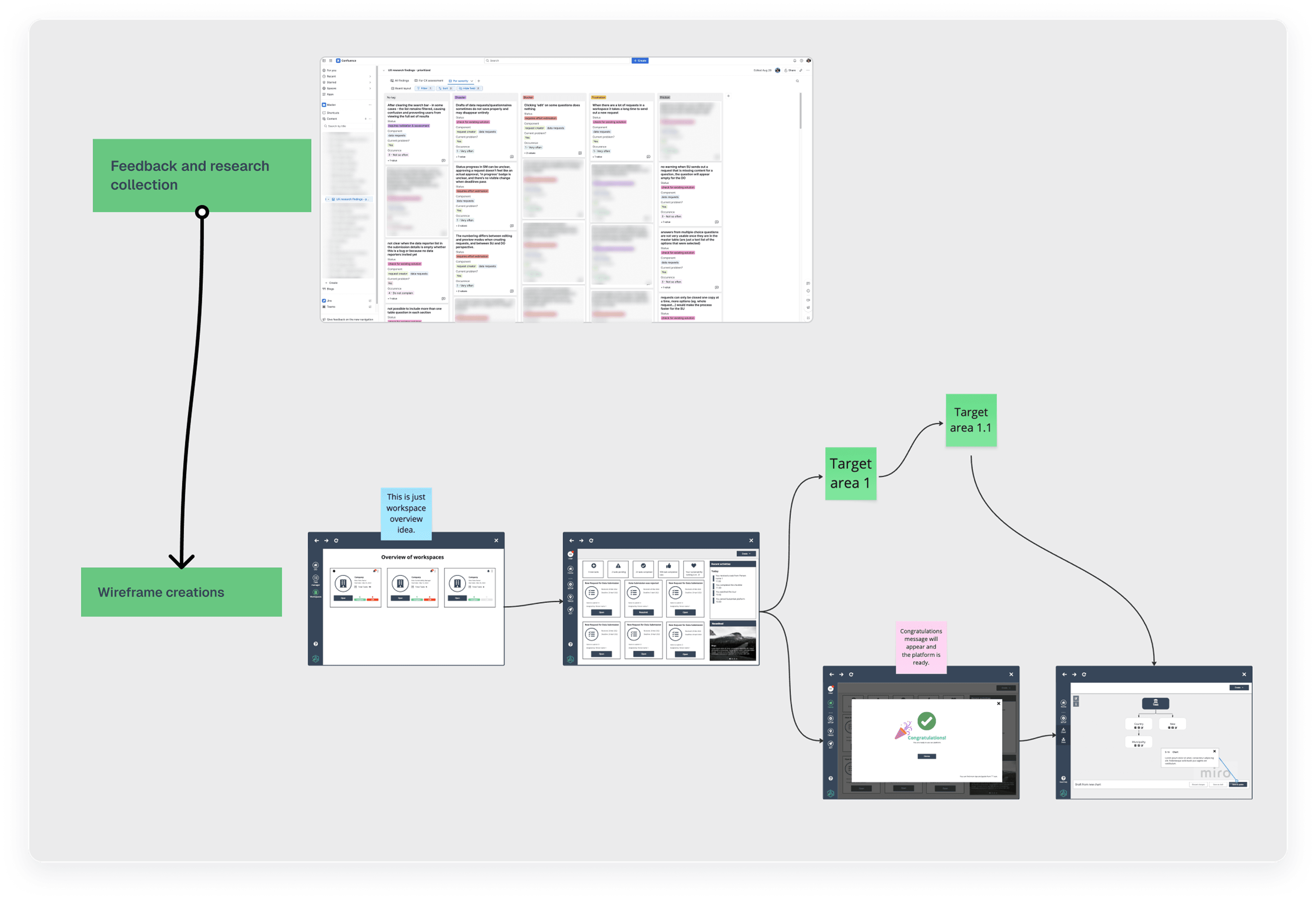
Image showing an example of new wireframes we created from user stories and acceptance criterias.
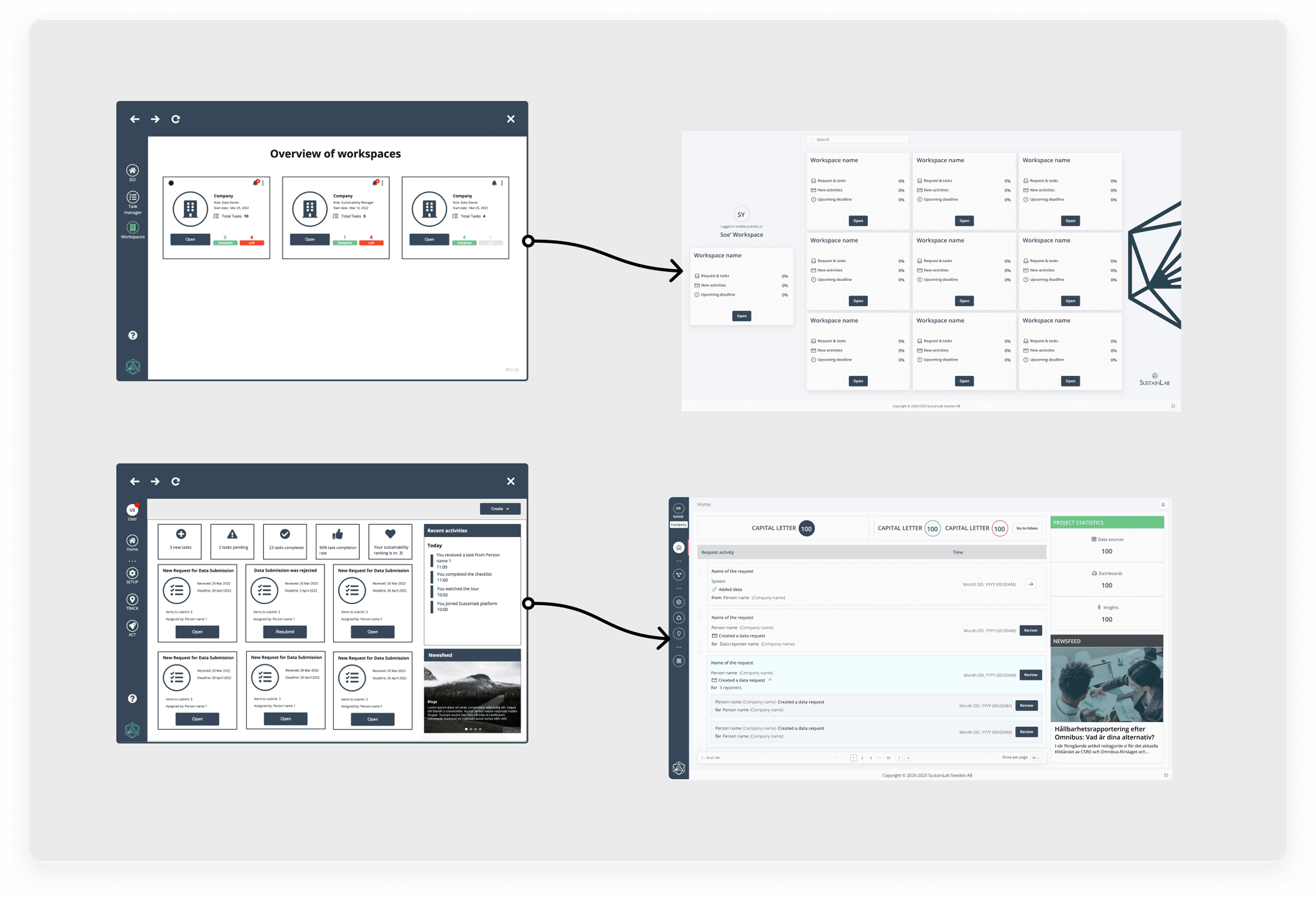
Image showing the iterations from low-fidelity to high-fidelity after feedback.
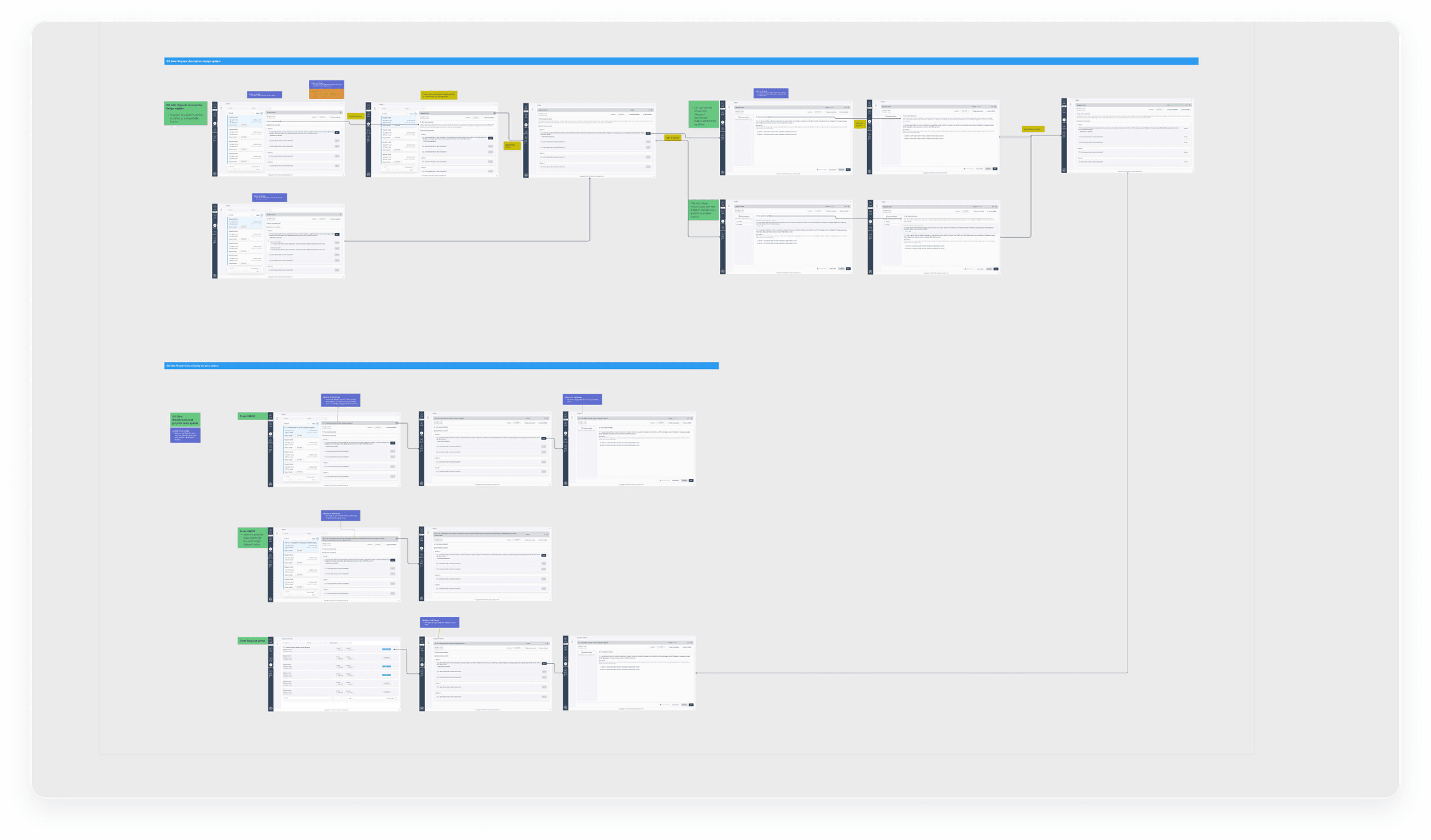
Image showing the final look at a feature design before handoff.
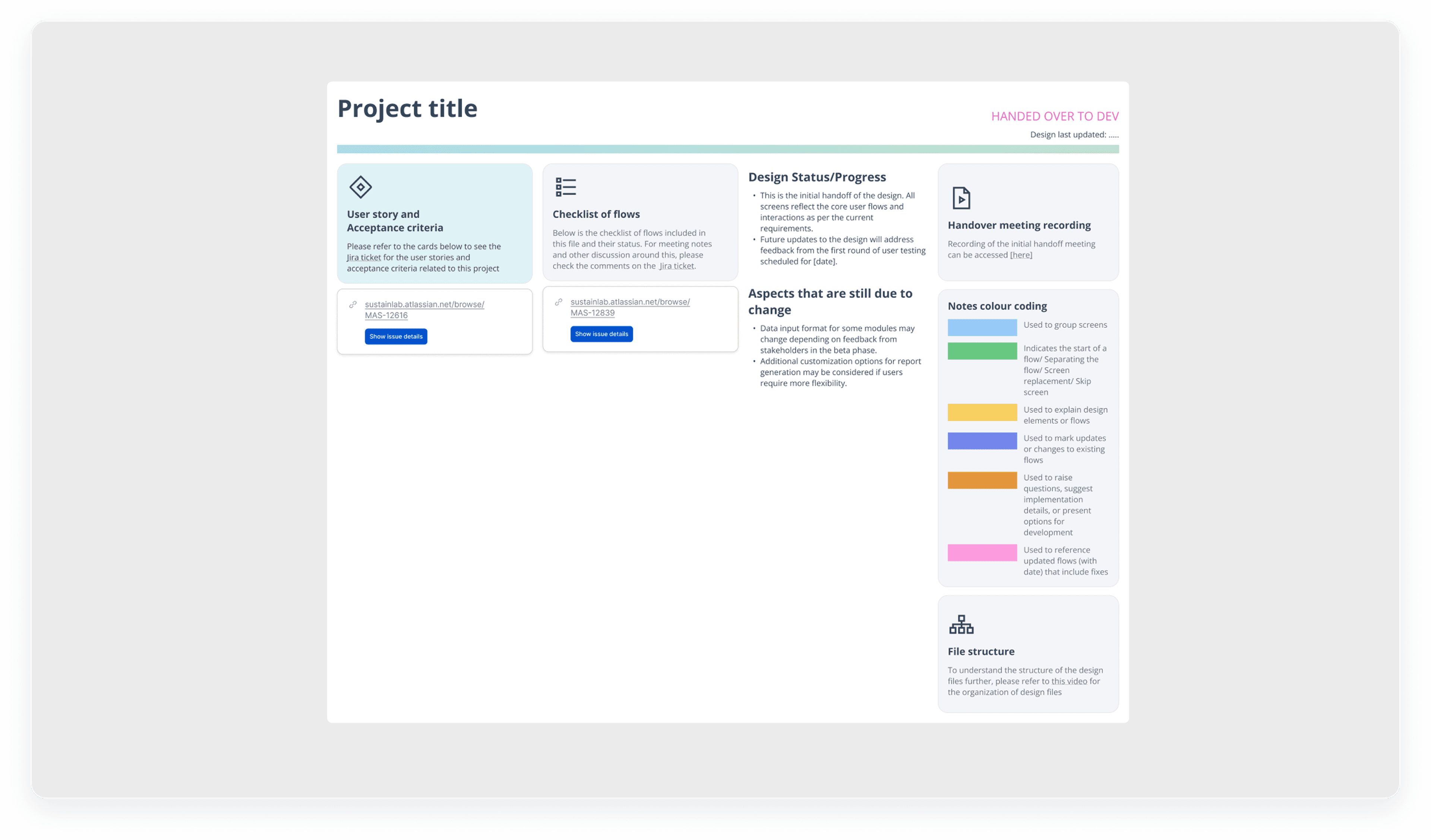
Image showing the handoff template we use.
Design system
Our UX team built the foundation of the platform's design system to bring structure and consistency. We gathered all commonly used styles, color palettes, and UI elements, then defined clear rules for how and where to apply them.
This design system made collaboration easier across teams, improved efficiency, and ensured that new features would align visually with the rest of the platform. It continued to evolve alongside the product as we refined patterns and introduced new components.
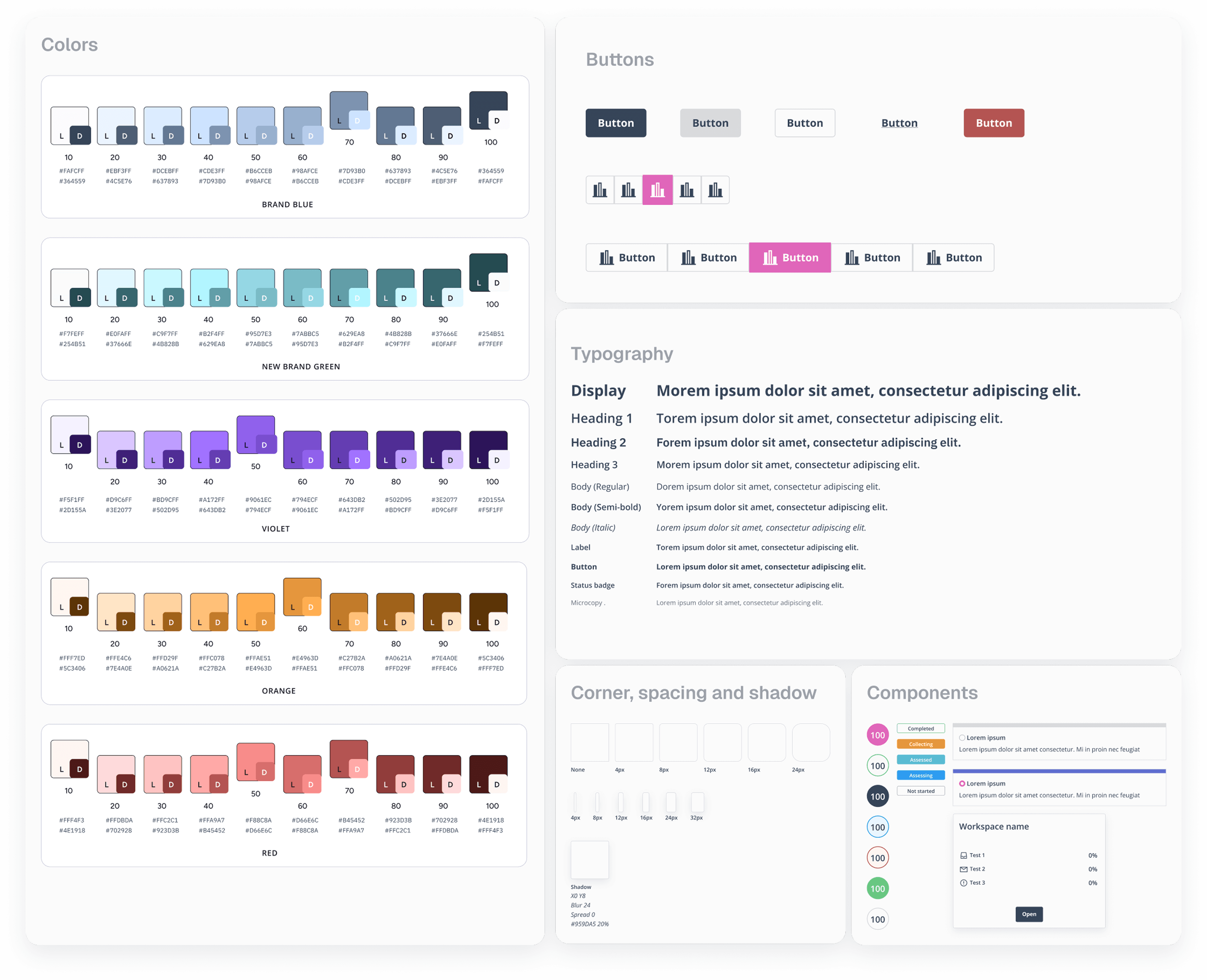
Image showing some examples from the design system we created.
Outcome
Through gradual improvements and close collaboration, the platform became easier to navigate and visually more cohesive. Users could understand complex sustainability data more intuitively, while the team benefited from a stable design system that improved consistency and reduced rework.
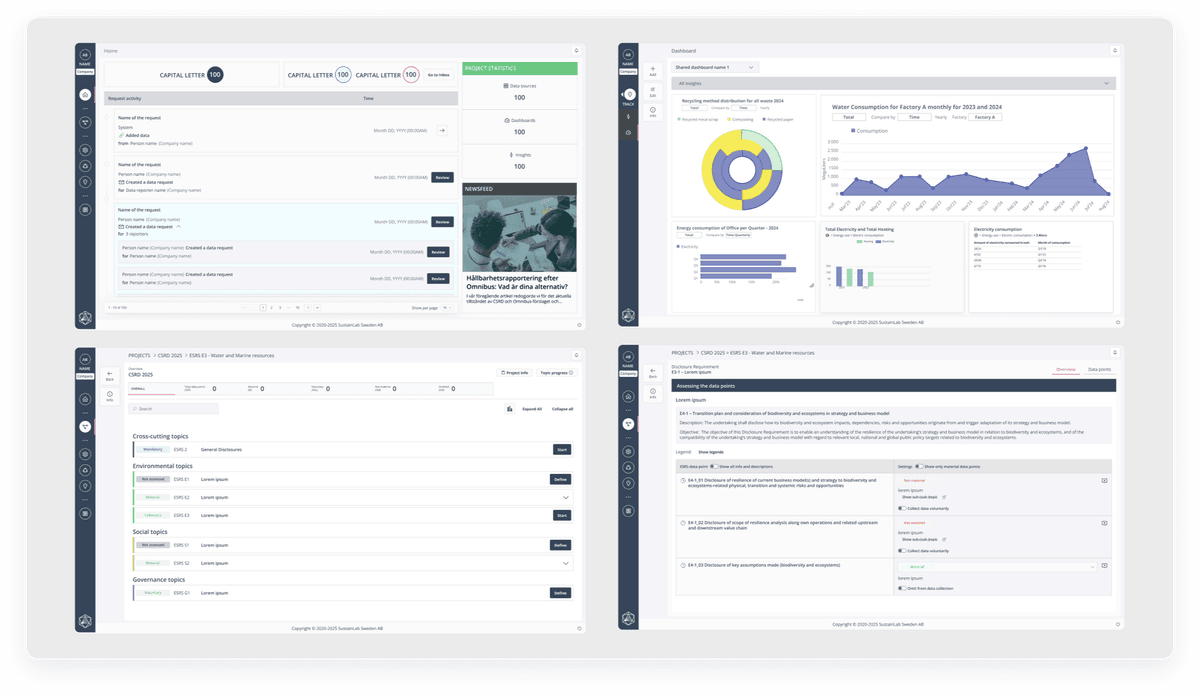
Image showing some of the high-fidelity designs from the platform.
Reflection
Working at Sustainlab strengthened my understanding of how to manage design within a complex, data-heavy product environment. It highlighted the importance of collaboration, clear documentation, and iterative refinement. Over time, I learned that steady, well-structured improvements could bring lasting value to both users and the product team.